What Newport Beach Waterfront Home Dock Leases Mean
September 10, 2026
September 10, 2026
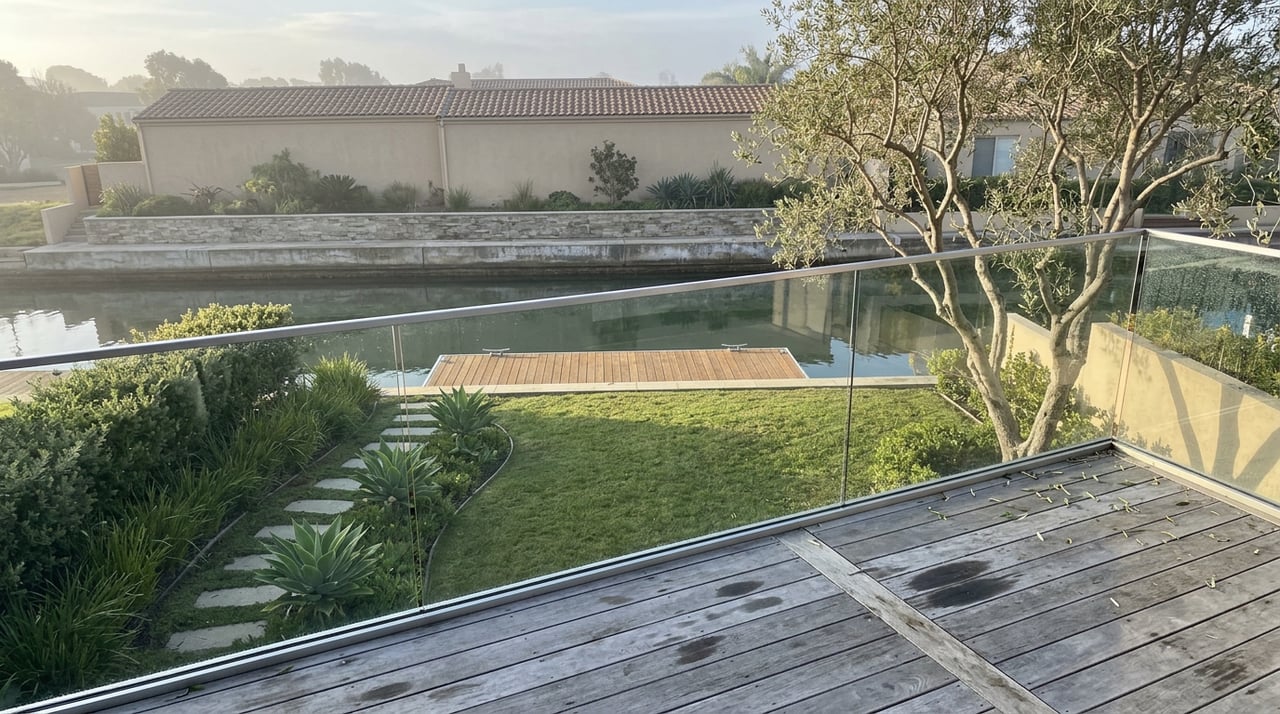
Buy a home on Balboa Island, Lido Isle, or the Peninsula and you'll sign a deed that makes you the owner of a piece of Newport Beach. What that deed typically does not make you is the owner of the dock behind the house, or the water it floats on. On most Newport Harbor bayfront parcels, private ownership stops at or near the bulkhead, the retaining wall at the back of the lot. Everything bayward of that line is public tideland, held in trust for the State of California and managed day to day by the City. The dock structure is usually yours. The ground beneath it is not, and in 2026 the terms governing that arrangement are being rewritten in real time.
If you're comparing Newport Beach neighborhoods against a median price you saw on a portal, this is the variable that number can't show you. Two homes on the same street, same square footage, same finishes, can carry very different real costs and very different risk depending on paperwork most buyers never think to request before they write an offer.
Newport Harbor holds more than 9,000 recreational vessels across roughly three miles of waterfront, and the City administers over 850 permitted residential piers along that shoreline. Every one of those piers sits on public trust land. Under California's Public Trust Doctrine, tidelands are reserved for navigation, fishing, commerce, public access, and similar public uses. A private dock is permitted on top of that land, not carved out of it as private property.
There are exceptions, and they matter if you're shopping specific addresses. State legislation has modified public trust restrictions for the historic tidelands at Beacon Bay, the Balboa Bay Club, and Harbor Island, so title in those pockets can behave differently than it does on Balboa Island or Lido Isle. This is exactly the kind of detail a title report catches and a listing photo never will.
A smaller number of Newport Beach waterfront communities take the arrangement a step further. On the Lido Peninsula, some homes sit on land the community leases outright, not just the dock. Buyers there pay a monthly land lease on top of any mortgage, often running from roughly $2,700 to nearly $4,000 a month depending on the lot, and that carrying cost is a big part of why home prices in that pocket run lower than comparable waterfront elsewhere in the city. It's a different product from a fee simple lot with a permitted dock, and it's worth knowing which one you're looking at before you fall for the water view.
| Arrangement | What you own | What you don't | Where you'll see it |
|---|---|---|---|
| Fee simple lot, permitted dock | The house, the upland lot, the dock structure | The tideland and water beneath the dock | Most of Balboa Island, Lido Isle, the Peninsula |
| Leasehold lot | The house and improvements | The underlying land itself, under a monthly lease | Portions of the Lido Peninsula |
| Historic trust exception | Ownership subject to legislation specific to that tract | Standard public trust restrictions may not apply the same way | Beacon Bay, Balboa Bay Club, Harbor Island |
Three surveyed lines govern how far into the water a Newport Harbor property can build and how large a vessel it can berth. They were established in Lower Newport Bay by an act of the United States Congress, and they can only be changed by another act of Congress. The distance between the bulkhead line and the pierhead line is, in plain terms, how much boat the property can hold.
A parcel with forty feet of that gap and one with seventy five feet are not comparable assets, even when the houses and the frontage look identical from the street. That single measurement, buried in a survey rather than a listing description, can separate two otherwise similar homes by seven figures. It's the kind of number a buyer needs before removing contingencies, not after.
A pier permit does not automatically pass from seller to buyer at closing. It requires a formal transfer application to the City of Newport Beach Public Works Department, signatures from both parties at close of escrow, a transfer fee, and a City pier inspection before the new owner is recognized as the permit holder. Skip that step and you're the owner of a house with a dock the City doesn't consider yours to use.
For anyone shopping harbor front, this belongs on the same checklist as the inspection and the appraisal. It's a government process with its own timeline, and it needs to start early enough in escrow that it doesn't become the reason closing slips.
In December 2025, the California State Lands Commission issued a report on how the City of Newport Beach manages its public trust tidelands. Its central finding on residential docks was blunt: the City has not been charging fair market rent for residential piers sitting over City tidelands. According to reporting on the Commission's review, fair rental value for those piers, currently charged around 58 cents per square foot, may run as much as double that rate once new appraisals are complete.
The Commission directed the City to commission an independent appraisal of residential pier leases, reconsider how pier rental area is calculated, review whether subleased piers are being billed at the lower residential rate instead of the commercial one, and end the practice of private mooring permit sales. Moorings are a related but separate piece of harbor real estate, covering the more than 1,200 permits that let boat owners anchor in the bay without a private dock, and the Commission's findings there prompted pushback from the Newport Mooring Association, which argued the report moved faster on mooring transferability than it did on the underpriced pier rents it identified in the same document.
The City's own published timeline runs through 2027: independent appraisals now underway, a series of Harbor Commission public meetings that started in spring 2026 and continue this year, a draft policy package expected this winter heading into 2027, and a comprehensive City Council vote to follow. At an August 2025 State Lands Commission meeting on the draft version of the report, Commission Chair and Lieutenant Governor Eleni Kounalakis was direct about where authority sits.
This commission does not set the rates for the pier... this is the city's call.
The City has said no rate increases or transfer restrictions take effect without City Council approval and public notice, so nothing is finalized as of this writing. But a buyer closing on a bayfront home in Newport Harbor this year is closing on a fee structure that is actively under review, not a settled one.
Across roughly 380 closed sales tracked over the trailing six months into August 2026, Newport Beach's median closing price sat near $3.4 million, with the middle half of those sales landing between about $1.85 million and $5.3 million. That spread is the more useful number than the median itself, because where a specific listing sits inside it depends heavily on which Newport Beach you're actually buying.
Newport Coast, the hillside enclave of ocean view estates on the city's south end, had an average home value near $5.6 million as of July 2026. None of the tidelands mechanics above apply there. Those homes look out at the Pacific from a bluff, not a bulkhead, and there's no dock, no pier permit, and no pending Harbor Commission vote attached to the purchase. On Balboa Island, Lido Isle, or the Peninsula, harbor access and dock rights are central to what you're paying for, which means the tideland questions above aren't a footnote. They're close to the point.
If you're weighing a blufftop ocean view against a bay front dock, you're not choosing between two versions of the same asset. You're choosing between two different legal products that happen to share a zip code.
Does the pier permit transfer automatically when I buy a Newport Beach waterfront home? No. It requires a separate transfer application to the City, signatures from both parties at closing, a transfer fee, and a City pier inspection. Build that timeline into escrow.
Are Newport Beach pier fees definitely going up? Possibly, but nothing is decided. The City is running new appraisals and public meetings through 2026 and 2027, and any rate or policy change requires City Council approval and public notice before it takes effect.
Is every Newport Beach waterfront home affected by this? No. The tidelands and pier permit system applies to harbor front property on Balboa Island, Lido Isle, the Peninsula, and similar bay front parcels. Ocean view estates in areas like Newport Coast sit outside the harbor and outside this process entirely.
Comparing a bay front lot to a bluff top view, or trying to price in a pending rate change on a pier permit you're about to inherit, is exactly the kind of decision that benefits from someone who reads title reports and Harbor Commission agendas for a living. If you're weighing Newport Beach against another South Orange County waterfront neighborhood, or you already own a bay front home and want to understand how this year's tideland review might affect what you'd net at sale, Hesley Team can walk the specific parcel with you. Request Your Home Valuation and let's look at what the paperwork actually says before you make a decision the median price can't.
We bring together a mix of integrity, imagination, and an inexhaustible work ethic, striving to make each buying and selling experience the best possible. Get assistance in determining current property value, crafting a competitive offer, writing and negotiating a contract, and much more. Contact us today.