Newport Beach Bayfront vs Oceanfront: Which Is Right?
June 11, 2026
June 11, 2026
If you are torn between a harbor view and a horizon view, you are asking the right question. In Newport Beach, bayfront and oceanfront living can feel like two very different versions of coastal life, even though both put you close to the water. Understanding how each setting shapes your daily routine can help you buy with more confidence and less second-guessing. Let’s dive in.
Newport Beach is not one uniform waterfront market. The city includes more than eight miles of beaches stretching from the Santa Ana River jetty to Crystal Cove State Park, and it also borders Newport Bay. That means your experience of “waterfront living” can vary a lot depending on whether you face the harbor or the Pacific.
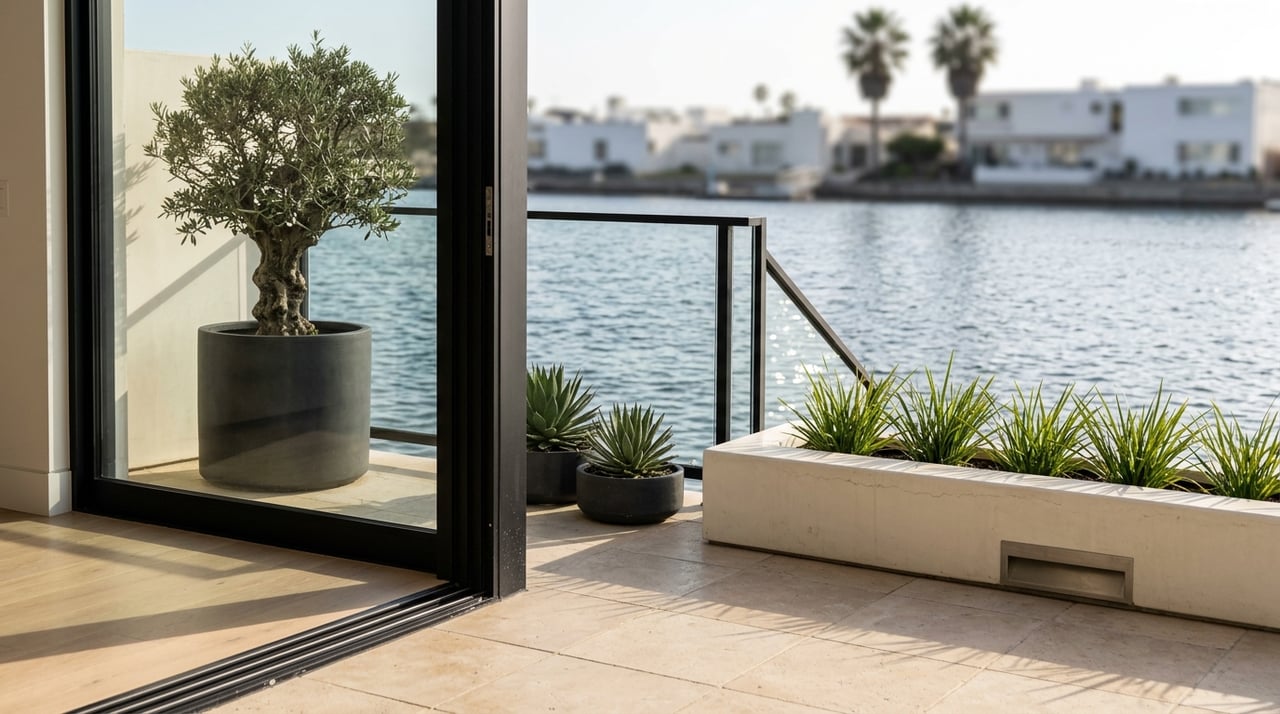
Bayfront living usually refers to harbor-facing property around Newport Harbor and Newport Bay. This side of Newport Beach is shaped by docks, marinas, island neighborhoods, and calm-water access rather than one continuous sandy shoreline.
Oceanfront living refers to the Pacific-facing side of the city, especially along the Balboa Peninsula and other beach-facing stretches. Here, the setting is more tied to the sand, surf, piers, and public beachfront activity.
Bayfront Newport Beach tends to feel more tied to the harbor and neighborhood rhythm. The city identifies several harbor islands as strictly residential, including Lido Isle, Linda Isle, Newport Island, Harbor Island, Bay Island, Collins Island, and Little Balboa Island. Balboa Island also includes a small commercial area, which adds a village feel without changing the overall residential character.
Daily life on the bay often centers on strolling, dining, boating, and enjoying the water at a slower pace. The Balboa Island Loop is a 1.70-mile paved walk with harbor views, and areas like Marine Avenue and Lido Marina Village add shops, restaurants, and waterfront activity to the experience.
The harbor itself reinforces that calmer setting. Newport Harbor is a no-wake area with a 5 mph maximum speed, which supports a more relaxed boating environment and a quieter visual backdrop of docks, slips, and boats moving at an easy pace.
On the bayfront side, your water view is more likely to be boats, docks, harbor channels, and marina activity. Instead of waves breaking on the shore, you get a calmer water scene that changes throughout the day with boating traffic and harbor light.
For many buyers, that creates a more neighborhood-oriented atmosphere. The setting often feels more tucked in and residential, especially on the harbor islands the city designates as residential.
Bayfront housing often reads as lower-density, island-style residential living. Based on the city’s descriptions, this can include island cottages, custom waterfront homes, and low-rise coastal or marina-adjacent buildings.
The overall look tends to reflect Newport’s harbor-side identity. Boats, docks, village-scale buildings, and maritime design cues play a bigger role here than broad beachfront architecture.
Oceanfront Newport Beach is more connected to the beach itself and to the public energy that comes with it. The Balboa Peninsula is a three-mile stretch bordered by Newport Harbor on one side and the Pacific Ocean on the other, and the city highlights features like the Wedge and Ocean Front Walk as part of that identity.
This side of town often feels more visibly active. The city’s Pier to Pier walk runs along the beachfront with ocean views, and the area can get crowded, especially when people head to the sand, piers, and boardwalk areas.
Oceanfront routines also tend to extend later into the day. The Newport and Balboa Piers are open until midnight, and fire rings near the Balboa Pier support evening beach gatherings and sunset routines that are part of the public beach culture.
On the oceanfront side, your view is more likely to be open Pacific water, surf, and changing coastal light. If you picture hearing waves, watching surfers, or stepping straight into a sand-oriented routine, this is usually the setting that matches that vision.
It also comes with a more public edge. Oceanfront parcels sit closer to some of the city’s most active beach areas, which is part of the appeal for many buyers and an important lifestyle factor to think through.
Oceanfront housing in Newport Beach often reflects the city’s older beach-cottage legacy along with later rebuilds and custom homes. The city ties traditional cottages especially to old Corona del Mar, Balboa Island, and the Balboa Peninsula, describing them as smaller homes connected to older development patterns.
In and around the Peninsula, local design references include Balboa Beach Cottage, Art Deco, and Spanish Colonial Revival. City materials also refer to vintage rustic coastal cottages from the 1920s and 1930s, which adds to the classic beach character buyers often associate with this side of Newport Beach.
One of the clearest ways to compare bayfront and oceanfront living is to think about how you want to spend an ordinary Saturday. If you picture calm-water recreation, dock access, marina activity, or harbor walks, bayfront living may feel like the better fit.
If you picture direct sand access, surf culture, boardwalk energy, and more time on the beach itself, oceanfront living may align better. Neither choice is better in a universal sense. The right one depends on what kind of coastal routine feels natural to you.
Both settings offer walkable experiences, but they feel different. On the bayfront side, walking is often about neighborhood loops, waterfront streets, and small-scale retail clusters like Marine Avenue and Lido Marina Village.
On the oceanfront side, walking is more centered on the beachfront itself. Ocean Front Walk and the Pier to Pier path define the experience, with broader exposure to beachgoers, cyclists, visitors, and public activity.
Transportation patterns reflect that difference too. The city offers the free summer Balboa Peninsula trolley to help people move around the oceanfront area without relying fully on parking. On Balboa Island, the city notes that parking can be difficult enough that the Balboa Pier ferry may be a better option.
For many buyers, this is one of the most important questions. Based on the city’s residential-island designations for much of the bayfront and the harbor’s no-wake speed rules, the bayfront generally suggests a more residential pace.
By contrast, the oceanfront side, especially on the Peninsula, is tied more closely to Newport Beach’s public beachfront identity. With the piers, beachfront paths, and visitor activity, it often feels more lively and more exposed to the energy of a destination beach area.
That does not mean every bayfront street is quiet or every oceanfront block is busy at all times. It means the overall pattern and daily feel tend to lean that way.
If you are trying to decide between bayfront and oceanfront living in Newport Beach, focus less on the label and more on your routine. Ask yourself what kind of water view you want to wake up to and what kind of movement you want around you during the day.
A bayfront home may be the better match if you want a harbor setting, boating access, calm-water recreation, and a more neighborhood-driven environment. An oceanfront home may be the stronger fit if you want direct sand access, surf culture, broad Pacific views, and a livelier beach atmosphere.
This is where local guidance matters. In Newport Beach, small location shifts can change how a property lives day to day, even when both homes are technically “waterfront.”
If you are weighing bayfront versus oceanfront living in Newport Beach, the Danielle Hesley Real Estate Group can help you compare micro-locations, narrow your priorities, and find the coastal lifestyle that truly fits the way you want to live.
We bring together a mix of integrity, imagination, and an inexhaustible work ethic, striving to make each buying and selling experience the best possible. Get assistance in determining current property value, crafting a competitive offer, writing and negotiating a contract, and much more. Contact us today.