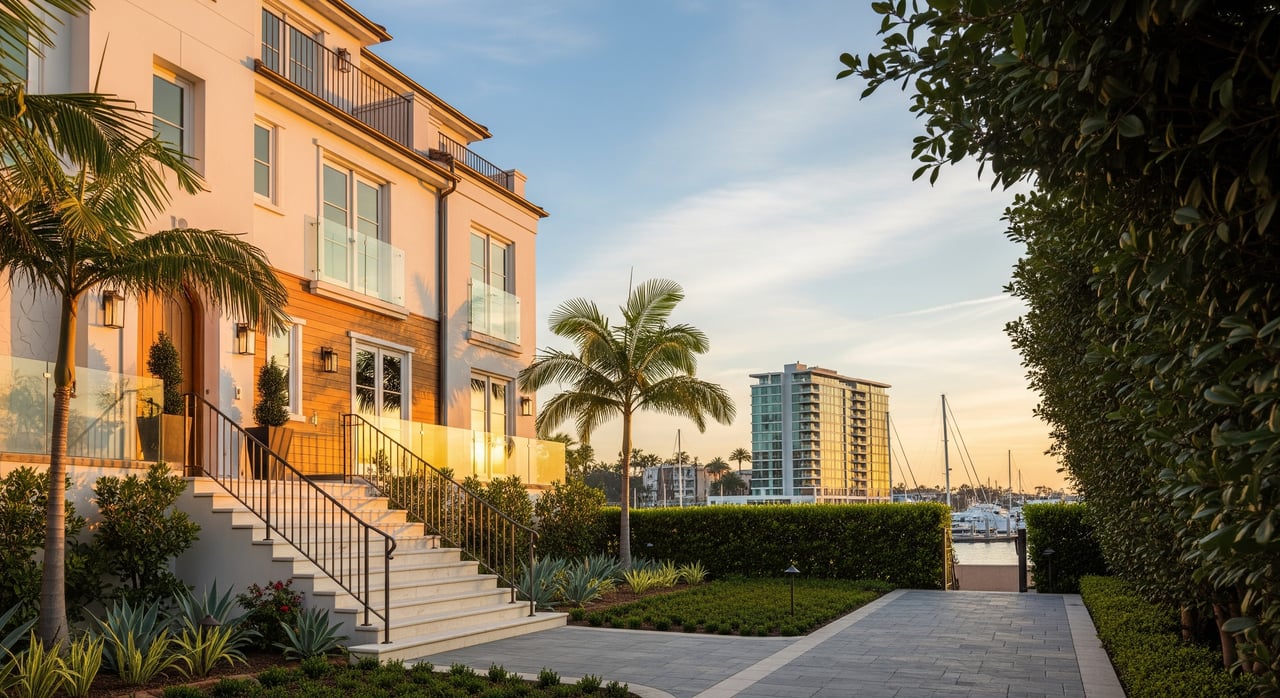
Trying to decide between a condo or a townhome in Newport Beach? You are not alone. If you are downsizing or buying a second home, you want simple ownership, manageable costs, and a lifestyle that fits the coast. This guide breaks down how each option works here, what it costs, how financing differs, and how to choose with confidence. Let’s dive in.
Quick difference: condo vs townhome
A condo gives you ownership of your interior unit plus a share of common areas. The HOA typically maintains the exterior, roof, and amenities, and it carries a master insurance policy. Your policy usually covers the interior and your belongings.
A townhome is a multi‑level attached home that often feels more like a single‑family house. Ownership varies. Some townhomes are legally condos with condo‑style HOAs. Others are in PUDs where you own the lot and exterior. The HOA still manages shared areas, but you may be responsible for exterior maintenance and more of the insurance.
In California, most of these communities are Common Interest Developments governed by the Davis‑Stirling Act. The key takeaway is that exterior style does not guarantee legal form. Always confirm the vesting and CC&Rs for the property you are considering.
How these homes show up in Newport Beach
Newport Beach has a wide mix of attached homes, especially near the water.
- Waterfront and harbor areas feature low‑rise and some high‑rise condo buildings, especially along the Balboa Peninsula and around Newport Harbor.
- Balboa Island and Lido Isle include small condos and fee simple cottages where ownership structure varies by street and complex.
- Inland pockets and newer planned areas, including parts of Newport Coast and Corona del Mar, offer townhome and patio‑home communities. Many of these are PUDs with private garages, small yards or patios, and community amenities.
Because legal form varies by community, do not assume a “townhouse‑looking” home is not a condo. Verify before you fall in love.
Costs and financing basics
Price and HOA dues
Newport Beach is a premium coastal market. Condos and townhomes generally cost less than nearby single‑family homes but still command higher prices than many inland areas due to proximity to the beach, harbor access, and limited supply.
HOA dues vary widely based on amenities and building type.
- Smaller condo associations often charge several hundred dollars per month.
- Larger waterfront or luxury buildings with extensive amenities commonly exceed $1,000 per month, and some run several thousand.
- Townhome and PUD fees can be lower if owners handle roof or exterior costs, but they can also be similar to condo fees when communities include robust amenities.
The best move is to compare what each HOA covers and the association’s financial health, not just the monthly number.
Insurance on the coast
Insurance needs differ by legal form and location.
- Condos typically use an HO‑6 policy for interiors and personal property. The HOA’s master policy may be “all‑in” or “bare walls.” The master policy details determine your coverage needs and potential out‑of‑pocket exposure after a loss.
- Townhomes and PUDs often require an HO‑3 policy that covers the structure and exterior, along with your interior and personal property. Some townhome‑style condos still rely on a master policy for exteriors, so confirm specifics in the CC&Rs.
- Coastal risk matters. Many waterfront and low‑lying areas are in FEMA Special Flood Hazard Areas. Lenders require flood insurance for homes in these zones with federally backed loans. Earthquake insurance is separate in California and can be material, especially for older buildings. Flood and earthquake coverage can raise your total carrying cost, especially near the harbor or ocean.
Request the HOA’s master insurance certificate early and get quotes for HO‑6 or HO‑3, flood, and earthquake policies before you write an offer.
Property taxes, Mello‑Roos, and assessments
Property taxes follow California’s assessed value rules. Some newer or master‑planned communities include Mello‑Roos Community Facilities District taxes on top of base taxes. These add to your annual cost and can vary by parcel.
Also review HOA reserve studies and meeting minutes for any special assessments. Older or underfunded associations may levy one‑time or recurring assessments for roof replacements, exterior work, elevator repairs, or major capital projects.
Financing and project approvals
Financing is not the same for every building.
- Condo projects must meet lender requirements. Fannie Mae, Freddie Mac, FHA, and VA maintain project approval standards. Issues like high investor ratios, litigation, low reserves, or mixed commercial use can limit loan options.
- Townhome and PUD properties often finance like single‑family homes and may face fewer project‑level hurdles, though lenders still review HOA financial strength.
- If you need FHA or VA financing, confirm project approval early. Conventional loans are common for downsizers and second‑home buyers, but even then, lenders may ask for HOA documents.
Cash purchases avoid project approval issues, but you still carry the same HOA, insurance, and special assessment risks.
Lifestyle and maintenance
Maintenance responsibility
- Condos usually mean lower hands‑on maintenance. You focus on interiors while the HOA handles common areas, exteriors, roof, and shared systems.
- Townhomes and PUDs give you more autonomy but add responsibility. You may maintain your exterior, roof, and small yard or driveway, depending on the CC&Rs.
If you want lock‑and‑leave convenience, condos can be ideal. If you want a more house‑like feel and private outdoor space, a townhome or PUD may fit better.
Amenities and privacy
Waterfront condos often include pools, fitness rooms, and security, with walkability to dining and beach paths. You will likely have more shared spaces and neighbors nearby.
Townhomes usually provide a private garage, more storage, and a patio or small yard. That can mean greater privacy and less shared activity, with fewer high‑rise style amenities.
HOA rules that shape everyday life
HOA rules can affect both lifestyle and resale.
- Rental rules: Many associations restrict short‑term rentals and may cap the number of homes that can be leased at any time. Newport Beach also enforces short‑term rental rules at the city level.
- Pet, parking, storage, and exterior rules: These vary across communities and can influence daily convenience and long‑term flexibility.
- Age‑restricted communities: Some 55+ buildings limit residency to certain age groups. Verify rules before touring.
For second‑home buyers, confirm guest policies, short‑term rental restrictions, and owner‑use rules early in your search.
Accessibility and layout
Condos often offer single‑level living and elevator access, which is attractive if you want to minimize stairs. Most townhomes have interior stairs between levels. If aging in place matters, prioritize single‑level or elevator‑served units.
Resale and marketability
What boosts resale here
- Views: Harbor and ocean views typically command premiums.
- Parking and storage: Dedicated parking, guest spots, and storage lockers increase buyer appeal.
- HOA strength: Healthy reserves, clear budgets, and no active litigation signal stability for buyers and lenders.
- Project approvals for condos: Buildings that meet lender guidelines tend to attract a wider buyer pool.
Carrying cost and buyer pool
Many buyers compare total carrying cost across options. That means mortgage, HOA dues, insurance, taxes, and any special assessments. High monthly dues, flood and earthquake premiums, and Mello‑Roos can shrink affordability or change your offer strategy. Keep a side‑by‑side tally as you compare properties.
Condo vs townhome: side‑by‑side
| Factor |
Condo |
Townhome/PUD |
| Ownership |
Interior unit + share of common areas |
Often fee title to lot and exterior; some are condo‑form |
| Maintenance |
HOA handles exterior, roof, common areas |
Owner may handle exterior, roof, yard, plus interiors |
| Insurance |
HO‑6 plus HOA master policy; scope varies |
Often HO‑3 covering structure and interior; confirm CC&Rs |
| Amenities |
Often more shared amenities, especially waterfront |
Often fewer shared amenities, more private space |
| Financing |
Project approval can limit loan choices |
Often similar to single‑family underwriting |
| Lifestyle |
Lower hands‑on upkeep, more communal |
More privacy and storage; house‑like feel |
Decision checklist for a specific property
Use this checklist for each home you consider:
- Confirm legal form and vesting: condo or PUD, and how the CC&Rs define ownership.
- Review HOA documents: budget, reserve study, insurance certificates, meeting minutes, bylaws, rental rules, litigation disclosures.
- Compare HOA coverage: what dues include for utilities, water, exterior, roof, elevator, security, and amenities.
- Map insurance needs: master policy scope, plus quotes for HO‑6 or HO‑3, flood, and earthquake.
- Check flood risk: confirm FEMA flood zone status and any local mitigation.
- Verify financing: ask your lender about project approval if you need FHA, VA, or certain conventional programs.
- Identify special taxes: confirm Mello‑Roos or other CFDs on the tax bill.
- Understand rental and short‑term rules: check both HOA and city regulations.
- Evaluate accessibility: stairs, elevator, and single‑level options as needed.
- Confirm parking and storage: assigned spaces, guest parking, and storage lockers.
- Consider neighborhood context: proximity to the beach or harbor, walkability, noise, and planned area improvements.
Where to look in Newport Beach
Here is what to expect in common neighborhood types:
- Balboa Peninsula and Balboa Village: Dense, walkable condo options near sand and dining. Parking and elevator access can be key decision points.
- Balboa Island and Lido Isle: Small‑scale attached homes and cottages with marina access. Ownership forms vary and storage is often limited.
- Newport Harbor frontage and West Newport: Harborfront condos with potential dock access and marina considerations.
- Corona del Mar and nearby oceanfront pockets: A mix of condos and attached homes close to parks and beaches. Expect premiums for views and proximity.
- Newport Coast and newer planned areas: Townhome and patio‑home communities, often PUDs, with gated entries and shared amenities. Some neighborhoods include Mello‑Roos.
How to choose with confidence
If you want lock‑and‑leave simplicity near the beach or harbor, with professional exterior maintenance and on‑site amenities, a condo may fit best. If you prefer a more private, house‑like feel with a garage and outdoor space, and you are comfortable handling more maintenance, focus on townhomes or PUDs.
Either way, base your decision on total carrying cost, insurance realities, HOA strength, and rules that match your lifestyle. A clear review of the CC&Rs, reserves, and insurance coverage will prevent surprises and help you buy with clarity.
Ready to compare specific communities and run through the checklist on an address you love? Reach out to the Danielle Hesley Real Estate Group for local guidance and a tailored plan that fits your goals in Newport Beach.
FAQs
What is the main ownership difference between a condo and a townhome in California?
- Condos typically include ownership of the interior plus a share of common areas, while many townhomes in PUDs include ownership of the lot and exterior, which can increase owner maintenance and insurance responsibilities.
How do HOA dues differ between Newport Beach condos and townhomes?
- Condo dues can range from several hundred dollars to over $1,000 per month in amenity‑rich waterfront buildings, while townhome and PUD dues may be lower if owners cover exteriors, though costs vary by what the HOA includes.
Do I need flood or earthquake insurance for a coastal condo or townhome in Newport Beach?
- Many waterfront and low‑lying areas fall within FEMA flood zones, which can trigger lender‑required flood insurance, and earthquake coverage is a separate policy in California that can materially impact carrying costs.
How do financing rules affect condo purchases in Newport Beach?
- Lenders review condo projects for approval, and issues like reserves, litigation, or investor ratios can limit FHA, VA, and some conventional loans, while many townhomes or PUDs finance more like single‑family homes.
What should downsizers prioritize when choosing between a condo and a townhome in Newport Beach?
- Look for single‑level or elevator access, strong HOA reserves, clear insurance coverage, manageable dues, and rules that fit your lifestyle, including guest policies and any rental restrictions.