A Practical San Clemente Neighborhood Comparison
July 2, 2026
July 2, 2026
If you are trying to choose the right part of San Clemente, one question matters more than almost anything else: what do you want everyday life to feel like? This city is not one uniform housing market. It works more like a coast-to-hills collection of neighborhoods, and your experience can change a lot depending on whether you want beach access, trail access, HOA amenities, easier freeway routines, or a more walkable coastal setup. This guide will help you compare San Clemente neighborhoods through that real-life lens so you can narrow your search with more confidence. Let’s dive in.
San Clemente offers a wide mix of living environments across a relatively compact city. City information highlights 25 parks, 6.8 miles of ridgeline trails, and 2.3 miles of coastal trails, which helps explain why neighborhood choice is often tied to lifestyle, not just home style.
The city’s planning framework also shows how distinct these areas are. Specific-plan areas include Forster Ranch, Marblehead Coastal, Marblehead Inland, Pier Bowl, Rancho San Clemente, Talega, and West Pico Corridor, while the Local Coastal Program separates Del Mar/T-Zone and North Beach/North El Camino Real into their own coastal focus areas.
Housing age also changes the feel from one area to another. West Pico Corridor includes some original subdivisions from the 1920s, while Talega construction began in 1999 and was completed in 2015. In simple terms, the coastal core tends to feel older and more mixed, Talega feels newer and more planned, and the inland hills often sit in the middle.
For many buyers, the coastal neighborhoods are what come to mind first when they think about San Clemente. These areas generally offer the closest access to the beach, pier, downtown services, and coastal transit options.
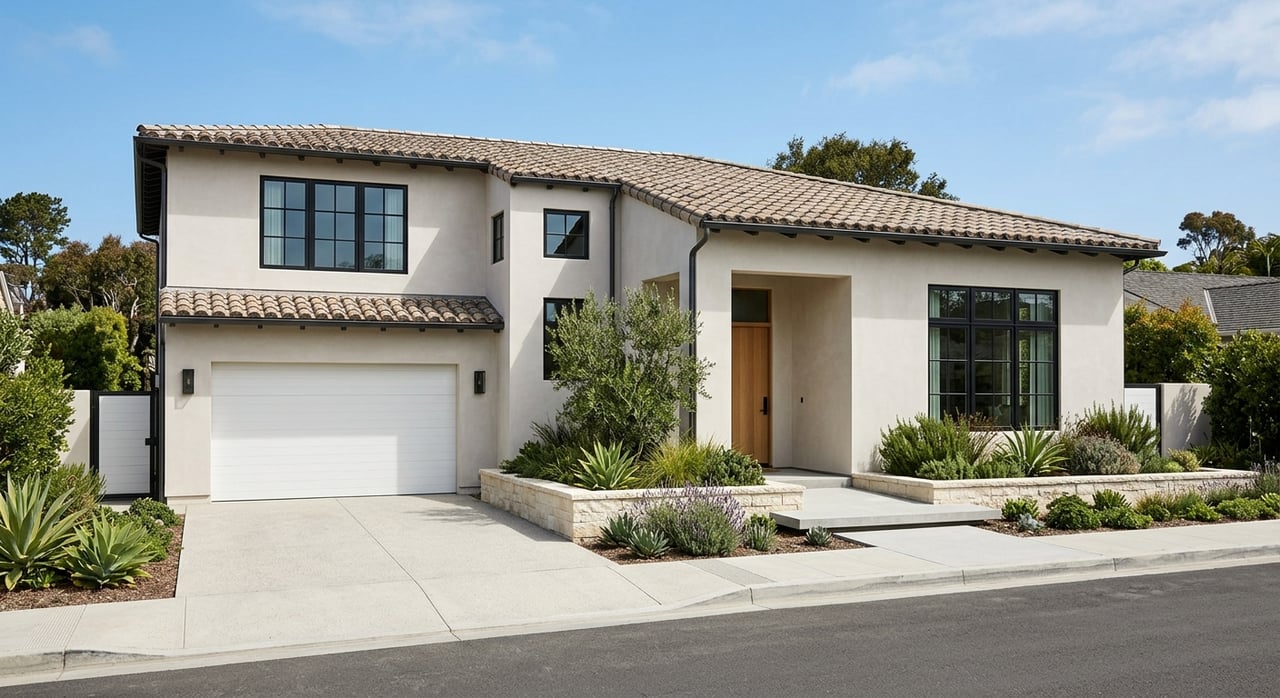
The coastal core has some of the city’s most varied housing. Central San Clemente includes condos and single-family homes with Mediterranean architecture, while Southwest San Clemente is mostly single-family homes with some condos and a mix of Craftsman, Mediterranean, and contemporary styles.
That variety is part of the appeal. You are more likely to see older residential fabric, a wider range of lot and building patterns, and a more layered neighborhood feel than in the newer inland communities.
Living near the coast can make everyday routines feel simple if your priority is access to the sand, the pier, and nearby services. The city’s beach access points show that North Beach and the Pier offer ADA access, metered parking, restrooms, and train-station access, while Linda Lane also includes ADA access and metered parking.
Other beach access points, including Calafia, El Portal, Mariposa, and T-Street, rely on stairs. That means even within the coastal areas, the kind of access you want can shape which pocket feels most practical for you.
One of the biggest coastal lifestyle features is the Beach Trail. The city describes it as a 2.3-mile route from North Beach to Calafia Beach, with stops at the Pier and T-Street, and notes that portions are ADA accessible.
There are also a few practical rules to know. E-bikes are prohibited on the trail, bikes must yield to pedestrians, and dogs must be leashed. As of June 2026, the city reports active restoration work between North Beach and Linda Lane, with reopening expected in summer 2026.
Transit access is stronger here than in inland parts of San Clemente. Metrolink serves both San Clemente stations at North Beach and the Pier, and the city’s free seasonal trolley runs daily in summer from May 22 to September 30, then on weekends the rest of the year, with stops every 15 to 25 minutes.
Beach-close living comes with real advantages, but it also comes with more activity. Beaches are open from 4 a.m. to 10 p.m., and the pier stays open until midnight, while metered parking is posted at North Beach, Linda Lane, Parque Del Mar/Pier Bowl, and Esplanade/T-Street.
In practical terms, that can mean more visitor traffic, more parking considerations, and a busier feel during peak periods. If you want a walk-to-beach lifestyle, those tradeoffs are usually part of the package.
If your ideal neighborhood feels organized, newer, and amenity-rich, Talega often stands out quickly. It is one of the clearest examples of master-planned living in San Clemente.
The city identifies Talega as a 3,510-acre specific-plan area in the northeastern part of San Clemente. Construction began in 1999 and was completed in 2015, which gives the area a newer overall feel than the older coastal neighborhoods.
The housing mix includes single-family homes, townhomes, condominiums, and apartments. Descriptions of the area also point to a range from modern condos to larger estates, with Craftsman and Spanish-style tract homes alongside some custom-built properties.
Talega’s amenities are one of its biggest selling points. The HOA describes a clubhouse, resort pool, lap pools, splash-n-play, tennis, pickleball, basketball courts, and a sand volleyball court, along with a yearly calendar that typically includes 18 to 22 events.
The clubhouse also includes rentable rooms and a catering kitchen. For some buyers, that creates a more self-contained neighborhood experience where recreation and community programming are built into everyday life.
Talega is not on the coast, but it still connects well to outdoor recreation. San Clemente has five major trail networks across beach, canyon, and ridgeline settings, and Talega’s specific plan states that hiking trails will link the community with San Onofre State Beach, Prima Deshecha Regional Reserve, and regional riding and hiking trails.
Nearby official trail facilities include the Prima Deshecha Regional Trail and the Cristianitos Regional Trail. If you care about active outdoor routines but do not need to live next to the beach, Talega can still check many of those boxes.
The biggest practical tradeoff is location relative to the coast and rail stations. Metrolink stations are at North Beach and the Pier, so beach trips or train commuting usually start with a drive downhill.
For buyers who want spontaneous walk-to-beach routines, Talega may feel less convenient. For buyers who value newer homes, HOA-managed amenities, and a more planned neighborhood structure, that tradeoff may feel very reasonable.
San Clemente’s inland hills often appeal to buyers who want a middle ground. These areas can offer more open-space access and a more trail-oriented lifestyle while still keeping you connected to the rest of the city.
This general category includes Forster Ranch, Rancho San Clemente, Marblehead Inland, Marblehead Coastal, and parts of the West Pico Corridor. The city notes that Forster Ranch covers 1,982 acres in the northwest part of town, while Marblehead and Rancho San Clemente each have distinct planning boundaries as well.
The housing feel varies by area. Forster Ranch is described as a hillside community with New Traditional and Spanish Revival homes, Rancho San Clemente includes Spanish-style homes and condos, and Marblehead’s inland portion is described as feeling more suburban than the busier coastal side.
The inland side of town is one of the strongest matches for buyers who want trails and parks close to home. The Forster Ranch Ridgeline Trail runs 3.2 miles along the hill crests and offers ocean views, while the Rancho San Clemente Ridgeline Trail runs 3.5 miles and has six entrances.
The city also allows horses on the Forster Ridgeline, Prima Deshecha, and Cristianitos trails. Neighborhood parks in these areas include Forster Ranch Community Park, Rancho San Clemente Park, Marblehead Park, Bonito Canyon Park, and the San Clemente Pump Track.
If your routine is more trail, park, and freeway-oriented than beach-oriented, the inland hills may feel like a better fit. The Prima Deshecha Regional Trail provides hike, bike, and equestrian access from the San Diego County border through San Clemente and into the San Juan trail system, while the Cristianitos Regional Trail runs behind Talega and rises to the San Clemente Summit.
That kind of access can be a major quality-of-life advantage if you like outdoor movement built into your week. You are trading immediate sand access for open space, ridgeline views, and a little more separation from the busiest coastal zones.
If you want the shortest version, San Clemente neighborhoods often break down like this:
That framework is not about better or worse. It is about matching the neighborhood to the way you actually live.
Before you narrow your home search, it helps to think through a few practical questions:
The answers can quickly point you toward the right part of town. In San Clemente, neighborhood fit is often less about square footage alone and more about whether your home supports the way you want to spend your time.
If you want help narrowing the options, the right guidance can save you a lot of trial and error. The team at Danielle Hesley Real Estate Group helps buyers make sense of South Orange County micro-markets and find the neighborhood that truly fits their lifestyle.
We bring together a mix of integrity, imagination, and an inexhaustible work ethic, striving to make each buying and selling experience the best possible. Get assistance in determining current property value, crafting a competitive offer, writing and negotiating a contract, and much more. Contact us today.